Silicone plate for glass vacuum laminating furnace
Apr 16, 2025
The glass vacuum laminating process is one of the mainstream processes for the production of decorative laminated glass and safety laminated glass, and the silicone plate of the laminating furnace, as the main material of the vacuum bag, is the key consumable that determines the yield of the finished product in the entire laminating equipment. Many glass processing factories encounter problems such as bubbles, indentations, and delamination during production, which are closely related to the sealing, flatness, and tear resistance of silicone sheets.
The glass vacuum laminating furnace works based on the principle of vacuum pressure difference: the stacked glass and EVA film (or other intermediate films) are placed inside a vacuum bag, and the equipment is synchronously heated and continuously vacuumed. With the help of external atmospheric pressure, the air between the glass and film is completely discharged, and the film is melted in a high temperature environment. The multi-layer glass is firmly heat bonded into one, ultimately forming a bubble free, transparent and stable laminated glass product.
The entire vacuum bag is composed of an upper silicone plate, a lower silicone plate, and irregular silicone sealing accessories. The silicone plate directly contacts the glass, transfers pressure and heat, and the airtightness, high temperature resistance, tear resistance, and surface flatness of the plate directly affect whether the laminated glass has defects such as bubbles, watermarks, indentations, and local delamination. It is an irreplaceable core component of the laminating furnace.
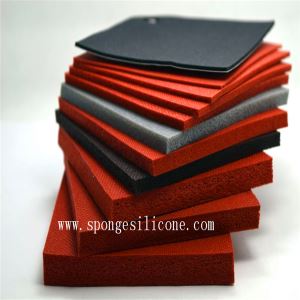
Ordinary spliced silicone panels on the market are prone to air leakage and stress concentration at the splicing position, and are prone to cracking after repeated high-temperature vacuum pumping. There are many restrictions on the production of large-area laminated panels. Our company specializes in the development and production of silicone panels specifically designed for the glass laminating industry, with a main focus on integrated molding of 3500mm wide panels without the need for splicing, thus avoiding the risk of air leakage and damage at the splicing joints from the root; The specifications cover a thickness of 2-8mm, and the length can be customized according to the customer's equipment size and glass processing format, suitable for small and medium-sized laminating furnaces and large large format laminating production lines.
Product advantages
1. Whole piece without splicing: The maximum width is 3500mm, formed as a whole without splicing seams, with stable vacuum sealing, suitable for the production of large-sized laminated glass, artistic laminated glass, and engineering laminated glass;
2. Flexible customization of specifications: Thickness of 2-8mm can be selected, length can be cut according to needs, and it is suitable for different negative pressure, temperature, and production frequency of laminating processes;
3. High temperature resistance and repeated fatigue resistance: Suitable for continuous high temperature, vacuum and pressure cycle working conditions of the laminating furnace, with good rebound, less adhesive, longer service life, and reduced cost of frequent board replacement;
4. Uniform pressure transmission: The thickness of the board surface is uniform, and the force is consistent when applying pressure, reducing local bubbles and thickness deviations in laminated glass and improving the qualification rate of finished products.
Applicable scenarios
Widely equipped with various types of glass vacuum laminating furnaces, used for the production and processing of EVA laminated glass, art laminated glass, laminated wire glass, painted laminated glass, guardrail safety laminated glass, etc. It is a commonly used supporting consumable for glass processing factories, art glass factories, and engineering glass enterprises.